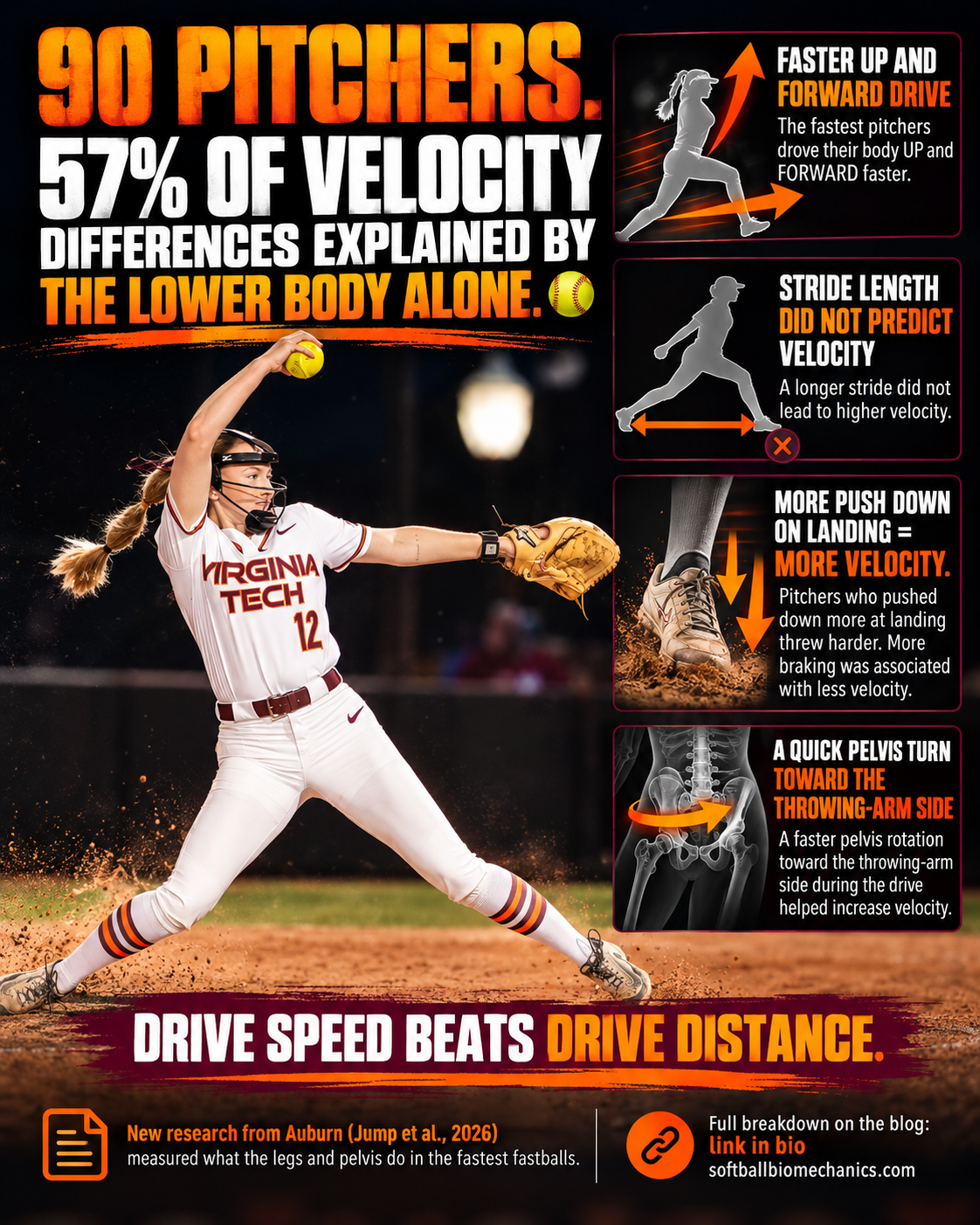

For this week I want to take you back to 1982 for Alexander and Haddow’s article “A kinematic analysis of an upper extremity ballistic skill: The windmill pitch.” Four elite pitchers participated throwing pitches in an old school motion capture lab. They used the 2 best pitches from each pitcher for their analysis. In the 1980s, every frame had to be analyzed separately, marking all the landmarks by hand. This is why there were low numbers of both participants and pitches analyzed.
Key Findings:
- The arm moves in order: first the shoulder and upper arm swing, then the forearm, then the hand really whips forward ⚾ .
- Before the hand released the ball, the upper arm slowed down first, then the lower parts kept speeding up. This helps build up power and control.
- To do this right, your muscles—especially those that slow things down—have to be strong because they work in a special way (called “eccentric contractions”).
Implications: I often see social media posts and talk to coaches about the sequence for softball pitchers, but this information has been around for a long time (since 1982). Understanding how to teach it is still in the works, but I believe it’s getting better. The standard of velocity is probably much higher than 60 mph at the Power 4 level, which is great! I joke (but I am also serious) that when coaches tell me the “great arm they’ve got” throws 60 mph, I respond saying, “I have 2 pitchers who throw 60+ on their change up”. True story, but 60+ is likely not possible without good sequencing, both in acceleration and deceleration.
More old research… I am currently the pitching coach for my son’s 10U all-star team and was reminded of another old study. Martens in 1959 stated that the most effective post-game talks should be 5 minutes or less. Almost 70 years ago, we were told to keep it short, and with shorter attention spans with our current generation of kids, it might not be a bad idea . Good luck out there during summer ball