I want to help coaches and athletes with some bullets on strength and conditioning for a pitcher. I generally advise players and parents in my biomechanics camps that I can’t be there to train every pitcher. However, I can try to give you guidelines to pick the right coach. Here are some of the keys to look for a strength coach that will help with performance and avoid injury.
- Maxes are a myth – Strength coaches like to measure 1-rep maxes (1RM) to program weight for their athletes. They also do this to show you how much “better” you’ve gotten. Hot take: maxes don’t have anything to do with performance on the field. No studies have ever linked (in softball or baseball) 1RM and performance. If your strength coach talks about 1RM with a lot of pride, beware.
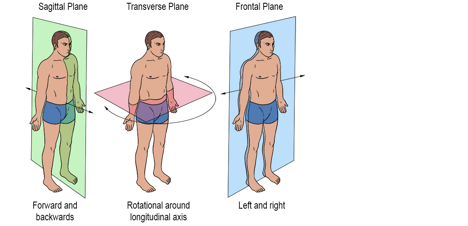
- Know your planes – There are 3 planes of movement (and 3 axes): Frontal, Sagittal and Transverse. Frontal plane movements go side to side, sagittal plane is forward and backward and transverse is rotational. ROTATIONAL!!!! Most programs focus on sagittal movements (squat, deadlift, bench) but the softball pitcher’s main plane of movement is the transverse plane (think all the movements in the kinematic chain). If you never train in the transverse plane (medball throws, paloff presses, etc.) or only do them as accessories, beware.
- That said… Back Squats? – Why back squat…. I am still waiting. The back rack creates more compressive stress on the spine than any softball athlete needs, so heavy back squats don’t make sense for a softball pitcher. Also, how often are a softball players’ feet side by side? Never for a pitcher. Safety squats are preferred, then probably Zerker holds. If you are split squatting (RFE, FFE or plain SS) then a back rack may be ok because the weight is reduced. Front Squats can get dangerous if you lack wrist or upper back mobility. So, if you can, safety split squat would be an ideal MAIN Lift. Single-leg variations are also great for pitching. The Raymer Strength guys shared an interesting blog about what they do with single-leg squats which are very good as well.
- Grip Strength – Research repeatedly shows that grip strength is positively correlated with pitch velocity, spin rate and bat speed. The more often you train grip strength, the better you will get, period. Value grip strength like you value you a good glove because it’s essential for ALL softball players.
- Bench Press – The pectoralis major, the major mover in the bench press, is also a major mover in the softball pitch. Further, the serratus anterior, which holds the shoulder in place for the bench and softball pitch, is important to train. So, don’t sleep on the bench and because the softball pitch requires a complete circumduction of the shoulder, incline and shoulder press variations should also be part of your program. Just be smart. Max lifts in any plane are not necessary, and dumbbells are your best friend. Think stability, not powerlifting.
- Deadlifts are ok – deadlifts are in the sagittal plane, and we don’t need to get a 1RM, but there are a lot of benefits to deadlifts. A. they primarily work the posterior chain. B. They don’t synthetically load the spine. C. They require a lot of grip strength (please no straps). D. The deadlift is more related to jumping. But I also love single-leg variations. RDLs require a coach to make sure you’re maintaining a good hinge, so get a good pro.
- Don’t sleep on the frontal plane – Softball doesn’t have a lot of frontal plane moves, but pitching velocity is positively correlated with lateral broad jumps. So for pitchers, lateral lunges, Cossack squats, etc. are very good exercises.
- Biceps are a big deal – Research shows that the biceps brachii are activated much more in softball than in baseball and tendinitis in the upper long head of the biceps tendon is one of the main causes for injury. If you have felt pain in the front of your shoulder, more than likely that is the biceps. We aren’t trying to be body builders, but eccentric bicep curls, and biceps work in general needs to be a part of the program. Use dumbells and variations on every set, meaning you should mix variations every set using the tempo of 4 seconds down, 0-2 seconds at the bottom, then up. Sets of 15-30!!!
This is a good start. There is a lot more depth to go, but let’s start there.
Also…
We can also get into the timing of when to start a training program. Remember that up to roughly 12 years old, kids can develop more fast-twitch muscle by training explosively. Here was a good post about explosive single-leg training by Joey Bergles. Kids don’t need a ton of weight, if any. They just need to do explosive activity.