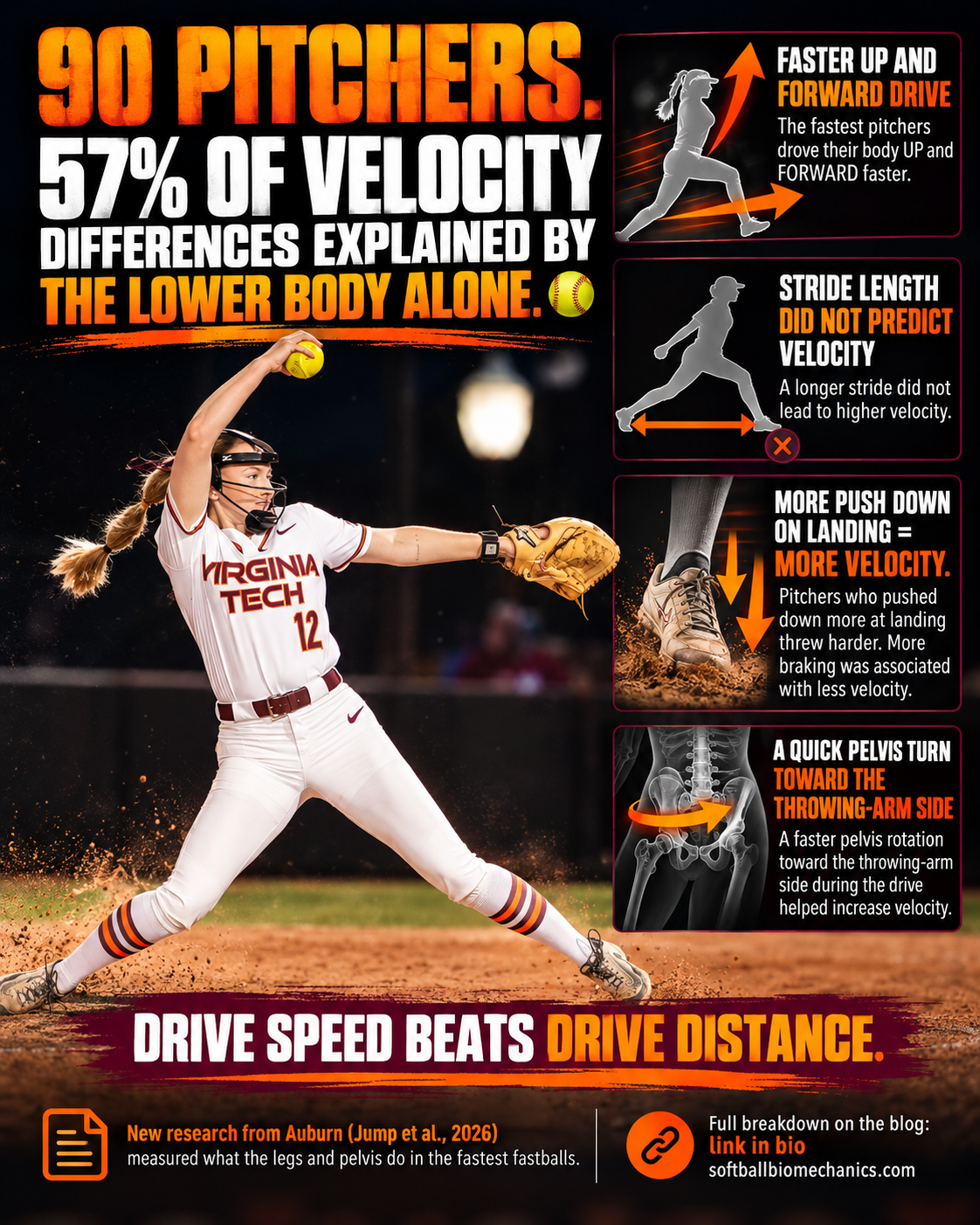

I am trying something new this week. I have collected PDFs of every biomechanics article for softball pitching for the dissertation. I wanted to try something, so I uploaded it to Chat GPT to see what it thought about the involvement of the trunk (or thoracic spine) during the softball pitch. I am summarizing in the newsletter but read this if you want everything that it said. Here are the highlights:
How the trunk / thoracic spine moves in the windmill softball pitch
- The trunk (thorax) is an active, proximal segment in the kinetic chain that receives energy from the legs/pelvis and transfers it to the arm. Trunk motion is multi-planar (axial rotation, lateral flexion, flexion/extension) but axial rotation of the thorax is a primary contributor to producing humeral angular velocity in the acceleration phase.
- Timing (sequencing) matters more than sheer magnitude.
- Trunk kinematics are linked to upper-limb positioning: glove-arm behavior early in the pitch influences subsequent trunk rotation (an “active glove arm” can delay trunk rotation and improve sequencing).
- Trunk motion also includes lateral flexion (toward glove or pitching side) as pitchers adjust balance and glove arm position; lateral flexion patterns change across phases and can reflect compensation for balance or glove-arm strategy.
Performance
- Efficient trunk rotation timing promotes better energy transfer to the arm and is associated with better pitching outcomes (velocity/efficiency).
- Later trunk rotation (properly sequenced) is favorable. When trunk rotation is delayed until after pelvic rotation/stride push, trunk angular velocity coincides with arm acceleration and supports greater distal speed. Conversely, early trunk rotation (i.e., trunk rotated too far toward pitching side at foot contact) indicates poor sequencing and is associated with less efficient energy transfer.
- Several studies found glove-arm position predicts trunk rotation patterns that then influence shoulder kinetics and, indirectly, performance.
Injury
- Altered trunk rotation timing or magnitude is associated with upper-extremity pain.
- Compensation can mask deficits.
- Specific trunk features tied to injury risk.
- Poor lumbopelvic / trunk control increases injury susceptibility.
Practical coaching / clinical takeaways
- Train sequencing drills that encourage pelvis push → delayed trunk rotation → arm acceleration (timing drills, resisted trunk rotation drills). This emphasizes timing over more rotation.
- Cue the glove arm to stay in line early (phase 1) — this tends to delay trunk rotation and promote better sequencing and lower shoulder moments.
- Assess trunk/lumbopelvic control and balance (single-leg squat, COM checks, stride length control). Deficits here are associated with altered trunk rotation and with upper extremity pain.
- Watch for compensations (maintained velocity but altered trunk kinematics) — presence of pain with “normal” energy-flow or velocity suggests compensatory mechanics that need addressing.
More…
I ran into a post from Alex Simone of Simone Baseball that I found interesting. These are medball drills for hitters, but my research found that medball scoop throw velocity positively correlated with pitch velocity. Check out the post and tell me what you think.